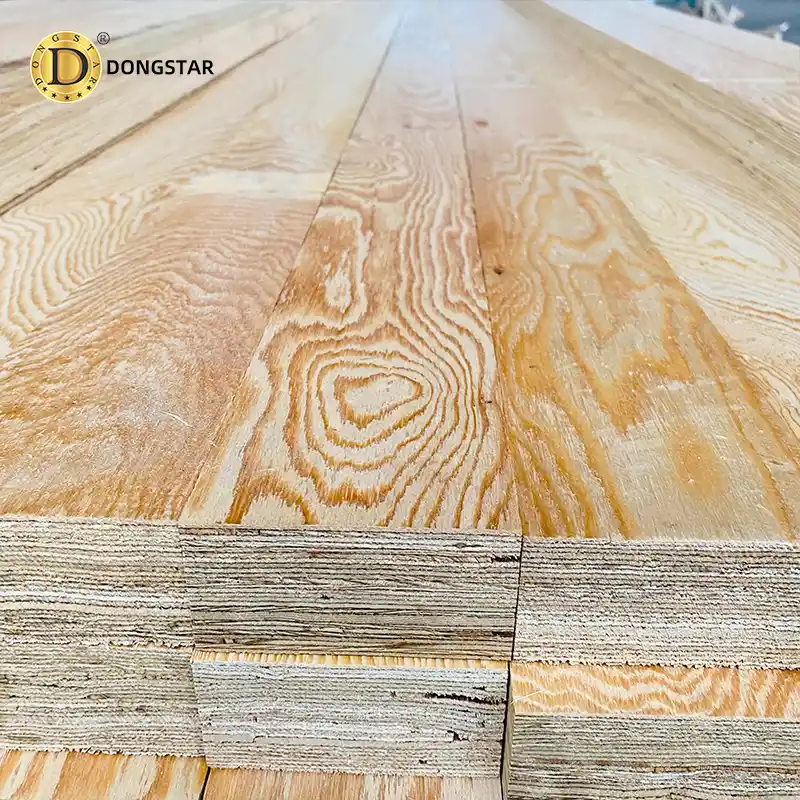
A plywood supplier can help furniture manufacturers control material cost, machining accuracy, production output, and compliance before panels reach the assembly line. The EU furniture sector employs about 1 million people across roughly 130,000 enterprises and generates more than €100 billion in annual turnover, so repeatable panel specifications matter at industrial scale. A supplier can control thickness, moisture, core construction, veneer grade, bonding, formaldehyde emissions, dimensions, packaging, and batch records. For an 18 mm panel order, even a 2% rejection rate across 10,000 sheets means 200 sheets require replacement, rework, or disposal before furniture production is completed.
Furniture plants normally process plywood through several stages: panel sizing, CNC routing, drilling, edge processing, veneering or laminating, sanding, finishing, and assembly. A sheet that passes visual inspection can still perform poorly after the first CNC cut because internal voids, overlapping veneers, weak glue lines, or uneven thickness may only become visible after machining.
For that reason, purchasing specifications should describe measurable properties rather than terms such as “premium quality.” An 18 mm furniture panel, for example, can be ordered with an agreed thickness tolerance, calibrated sanding requirement, defined face grade, specified core species, moisture range, glue type, and defect limits for open joints or core gaps.
A manufacturer buying 5,000 sheets per month can then compare incoming batches against the same specification instead of accepting different panel behavior with each shipment. Even a 1% difference in usable yield represents 50 sheets in a 5,000-sheet order, so material consistency affects purchasing cost as well as daily factory output.
The application should determine the panel construction. A painted cabinet side needs a smoother and more uniform face than an internal sofa-frame component, while a drawer bottom may use a thinner construction than a load-bearing shelf measuring 1,000 mm or more between supports.
The same approach applies when selecting Commercial Plywood. A furniture factory should tell the supplier whether panels will be cut, laminated, painted, veneered, edge-banded, screwed, dowelled, or used as internal structural parts because each process places different demands on the face veneer, core and dimensional accuracy.
EN 636 provides three plywood use classifications: EN 636-1 for dry conditions, EN 636-2 for humid conditions, and EN 636-3 for exterior conditions. Under the associated service-class description, dry-use conditions correspond to an environment where relative humidity exceeds 65% only for a few weeks each year, while Service Class 2 refers to conditions where it exceeds 85% only for a few weeks.
Bond quality also needs to match the intended environment rather than the furniture label alone. EN 314-2 uses Bond Classes 1, 2, and 3, corresponding respectively to dry, humid, and exterior exposure categories, so a supplier can match adhesive performance to the service conditions specified by the manufacturer.
Thickness control becomes important once panels enter automated machining. If a CNC program is set for an 18.0 mm panel but actual material repeatedly moves outside the buyer's agreed tolerance, groove depth, dowel position, edge-banding setup, and final component alignment can require adjustment.
A useful receiving procedure can therefore record 3 measurements at several positions on each selected sheet rather than checking only one corner. For a lot of 2,000 sheets, a factory might inspect a defined sample of 20, 32, or 50 sheets according to its own quality plan, record the results, and compare supplier batches over time instead of relying on visual judgement.
Moisture should be handled in the same measurable way. Furniture manufacturers can define an acceptable incoming range—for example, 8–12% where suitable for the species, factory environment, processing method, and product requirement—and ask the supplier to record moisture readings before packing.
The range should not be treated as a universal plywood standard because equilibrium moisture changes with temperature and relative humidity. What matters operationally is that the buyer and supplier use the same measurement method, agreed range, and sampling procedure from the first approved batch through later production orders.
Core construction deserves separate inspection because surface quality alone cannot show what happens inside a panel. After cutting 100 sample strips from several sheets, a buyer can record open core gaps, overlapping veneers, poorly joined veneers, delamination, and irregular internal layers before approving a high-volume specification.
The effect becomes larger when one 2440 × 1220 mm sheet is nested into many small furniture components. If a sheet produces 20 usable parts, a defective internal section can affect several parts from the same cutting pattern rather than one finished component, raising material loss and machining time together.
Surface requirements should also be linked to the final finish. Panels receiving decorative veneer or thin laminates generally need controlled sanding and a flat substrate because depressions, veneer overlaps, repairs, and local thickness differences may remain visible after pressing.
Painted furniture can require even tighter surface selection because defects may become more noticeable after primer and topcoat. A supplier can therefore separate face grades by end use instead of supplying the same surface specification for internal cabinet backs, painted doors, upholstered frames, and visible shelving.
Formaldehyde documentation is another purchasing item for furniture sold in regulated markets. Under the EU E1 definition referenced in EN 13986, one route to classification is a steady-state chamber concentration of no more than 0.1 ppm, or 0.124 mg/m³, after 28 days under EN 717-1.
Manufacturers should specify the required test method because “E1,” “low emission,” and customer-specific limits should not be treated as interchangeable wording. Test reports should identify the tested product, method, result, laboratory, report date, and preferably the production specification represented by the sample.
Material traceability has become more relevant for European furniture supply chains as well. FSC Chain of Custody standard FSC-STD-40-004 V3-1 has been effective since 2021, and FSC states that certified material must be identified and tracked during manufacturing and distribution; certified organizations also undergo annual audits.
FSC information should therefore follow the commercial documents when an FSC claim is required. According to FSC, organizations manufacturing or trading forest products must hold appropriate certification when they sell products with FSC claims, so checking certificate scope and claim wording before production is more useful than requesting a logo after the order has shipped.
Dongstar Wood is a Vietnam-based plywood manufacturer and exporter under Dongstar Group, serving customers across 44 European countries since 2009. We specialize in commercial plywood, film faced plywood, construction plywood, birch plywood, furniture plywood, and customized plywood solutions.
Backed by CE 2+, FSC®, EUDR, DOP, and SEDEX (BSCI) certifications, we meet European standards for quality, sustainability, and compliance. With over 15 years of manufacturing and export experience, we support importers, distributors, furniture manufacturers, and construction companies with reliable plywood supply and OEM/ODM solutions.
EUDR preparation adds another document layer for companies selling wood products into the EU. The European Commission states that the Regulation applies from 30 December 2026 for large and medium operators, while most micro and small operators have until 30 June 2027; plywood is already within the timber-product coverage previously addressed by the EU Timber Regulation.
A plywood supplier serving European furniture customers can therefore organize species information, supplier records, product identification, origin information, and applicable due-diligence data before shipment. Document preparation should begin at order confirmation because reconstructing records after several production lots have been mixed is harder than maintaining traceability while raw veneers and finished panels move through production.
Cost analysis should extend beyond the quoted price per cubic meter or sheet. Assume Supplier A offers 18 mm plywood at €20 per sheet with a 5% unusable rate, while Supplier B offers it at €20.60 with a 1% unusable rate; across 10,000 sheets, the first case leaves 9,500 usable sheets and the second leaves 9,900.
Before labor and replacement freight are included, Supplier A effectively costs about €21.05 per usable sheet, while Supplier B costs about €20.81. The lower purchase price therefore does not automatically produce the lower material cost once rejected panels are removed from the calculation.
Cutting yield provides another measurable comparison. A furniture company cutting six cabinet parts from a standard 2440 × 1220 mm board should compare that layout with customized dimensions when annual consumption reaches tens of thousands of panels.
If a revised sheet size reduces offcut from 14% to 9%, a plant consuming plywood worth €500,000 per year would theoretically keep another €25,000 of material in usable production before the additional price of custom sizing is considered. The supplier can review minimum order quantity, press size, trimming allowance, packaging, and container loading before the buyer changes its standard format.
A practical supplier-quality file can remain short while still producing useful data:
-
Record thickness at 3 or more points on sampled sheets and compare results by batch.
-
Check moisture on a defined sample such as 20–50 sheets from a production lot.
-
Cut sample panels to expose the core rather than inspecting only faces and edges.
-
Record face defects, sanding marks, repairs, warping, glue-line separation, and dimensional variance.
-
Keep batch numbers, production dates, packing lists, test reports, and approved reference samples.
Those records become more useful after 6 or 12 months because the furniture manufacturer can compare suppliers using actual receiving data. A supplier with fewer claims, stable thickness and predictable machining performance may reduce inspection frequency, while repeated failures can justify tighter sampling on later deliveries.
Packaging should receive the same level of specification because plywood can pass factory inspection and still arrive damaged. Export packs can include pallet supports, protective sheets, edge guards, waterproof wrapping where required, steel or PET straps, identification labels, and loading plans suited to 20-foot or 40-foot containers.
The manufacturer can also specify the maximum number of sheets per pack and acceptable corner damage. If only 2% of 2,500 delivered sheets suffer edge damage, 50 panels may need trimming or reassignment to smaller components, so transport protection should be included when comparing suppliers rather than treated separately from panel quality.
Supply planning becomes easier when the manufacturer shares a rolling forecast instead of releasing isolated purchase orders. A factory consuming 8 containers per month can provide an 8–12 week estimate, allowing the supplier to schedule veneer purchasing, pressing, sanding, inspection, packing, and container bookings around expected demand.
The furniture manufacturer can then keep safety stock based on actual consumption and lead time rather than an arbitrary inventory target. If monthly demand is 8 containers and total replenishment takes 45 days, a delayed shipment has a different production effect from one supplied locally within 7 days, so order frequency and reserve stock should be calculated around the real route.
Supplier development can continue after production begins. If 32 sampled sheets from a new batch show a higher rate of core gaps than the approved reference lot, the manufacturer can send measurements, cut-section photos, batch numbers, and defect locations back to the mill so the next production run can be checked against the same record.
Over several orders, the purchasing team can track rejection percentage, claim frequency, on-time delivery, thickness results, moisture readings, packaging damage, and usable cutting yield. A plywood supplier helps a furniture manufacturer most when every shipment can be compared against measurable specifications rather than judged only by price and appearance.